
DRY MOUTH
What is dry mouth?
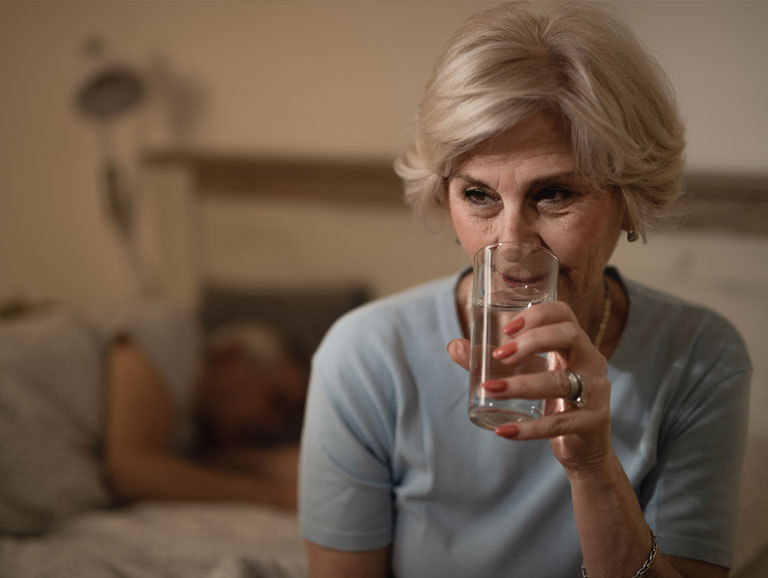
Have you ever noticed your mouth feeling dry, making it hard to speak, swallow, or even sleep? This is dry mouth, a common condition among older adults. It happens when the salivary glands don’t produce enough saliva to keep the mouth moist and protected. Many people see it as just another sign of ageing, but it can actually have a major impact on oral health and quality of life. Saliva plays an essential role: it keeps teeth strong, protects gums, helps with swallowing, and prevents infections. When it’s lacking, the mouth becomes more vulnerable.
Why does dry mouth occur?
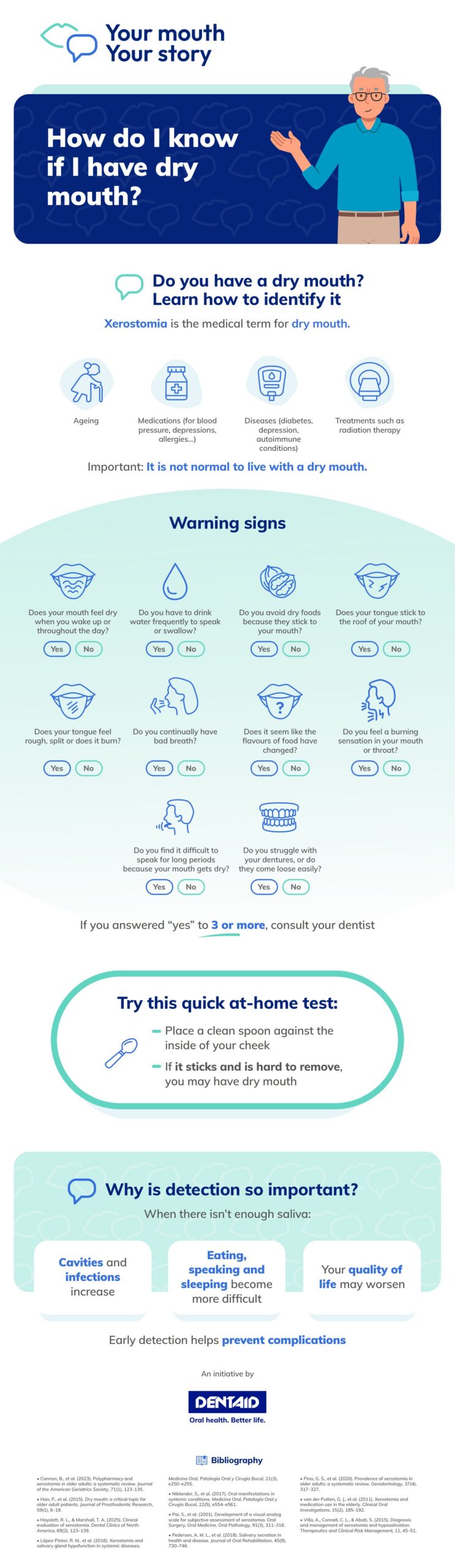
As we get older, the salivary glands produce less saliva. Age causes the salivary glands to function less efficiently. In addition, many commonly used medications – such as those used to treat high blood pressure, depression, or allergies – have oral dryness
as a side effect.
Some chronic diseases, such as diabetes, also increase the risk of developing this condition. And we must not forget lifestyle habits: tobacco smoking, alcohol consumption, or using mouthwashes that contain alcohol dry out the mouth even more.
How to identify dry mouth?
Constant feeling of dryness in the mouth or throat
Difficulty chewing, swallowing, or sleeping
Rough tongue and chapped lips
Persistent bad breath
Occurrence of cavities or gum inflammation
What impact does a dry mouth have?
Dr Víctor Gil, director of the Master’s in Gerodontology, Special Patients and Oral Medicine at the International University of Catalonia, explains how having a dry mouth affects quality of life.
Practical tips for everyday life
The good news is that there are many simple ways to help relieve dry mouth:
- Drink water frequently, even when you’re not thirsty.
- Eat juicy fruits such as watermelon, melon, grapes or oranges.
- Use sugar-free candies or chewing gum with xylitol (if recommended by your dentist).
- Include fresh vegetables such as cucumber or cooked carrots to help stimulate saliva.
- Sleep with a humidifier and apply a moisturising gel before bed.
- Choose alcohol-free toothpaste and mouthwashes that hydrate the mouth and protect the gums.
These simple tips can help relieve oral dryness and bring back comfort to your daily life.
What treatments are available?
Along with home remedies, your dentist or doctor may recommend different options to help manage dry mouth. There are specific products for dry mouth, such as gels, sprays or lozenges that help promote saliva production and provide a greater sense of moisture.
In some cases, your healthcare professional may review your usual medication to minimise side effects or prescribe treatments that support saliva production when appropriate.
When should you see a dentist or doctor?
Don’t ignore persistent dry mouth. It’s advisable to see a professional if:
- The dryness is constant and occurs daily.
- You notice new cavities or gum problems.
- You have difficulty speaking, swallowing, or sleeping due to lack of saliva.
An early check-up can help prevent complications and ensure you receive the right treatment.


Remember
Dry mouth doesn’t have to get in the way of your daily life. With simple habits and guidance from your dentist or doctor, you can restore comfort and take care of your oral health.
A hydrated mouth is a healthier mouth.
Access tailored solutions

Access tailored solutions
Bibliography
- Cannon, B., et al. (2023). Polypharmacy and xerostomia in older adults: a systematic review. Journal of the American Geriatrics Society, 71(1), 123–135.
- Han, P., et al. (2015). Dry mouth: a critical topic for older adult patients. Journal of Prosthodontic Research, 59(1), 6–19.
- Hayslett, R. L., & Marshall, T. A. (2025). Clinical evaluation of xerostomia. Dental Clinics of North America, 69(2), 123–139.
- López-Pintor, R. M., et al. (2016). Xerostomia and salivary gland hypofunction in systemic diseases. Medicina Oral, Patología Oral y Cirugía Bucal, 21(3), e250–e255.
- Niklander, S., et al. (2017). Oral manifestations in systemic conditions. Medicina Oral, Patología Oral y Cirugía Bucal, 22(5), e554–e561.
- Pai, S., et al. (2001). Development of a visual analog scale for subjective assessment of xerostomia. Oral Surgery, Oral Medicine, Oral Pathology, 91(3), 311–316.
- Pedersen, A. M. L., et al. (2018). Salivary secretion in health and disease. Journal of Oral Rehabilitation, 45(9), 730–746.
- Pina, G. S., et al. (2020). Prevalence of xerostomia in older adults: a systematic review. Gerodontology, 37(4), 317–327.
- van der Putten, G. J., et al. (2011). Xerostomia and medication use in the elderly. Clinical Oral Investigations, 15(2), 185–192.
- Villa, A., Connell, C. L., & Abati, S. (2015). Diagnosis and management of xerostomia and hyposalivation. Therapeutics and Clinical Risk Management, 11, 45–51.