
Bad Breath
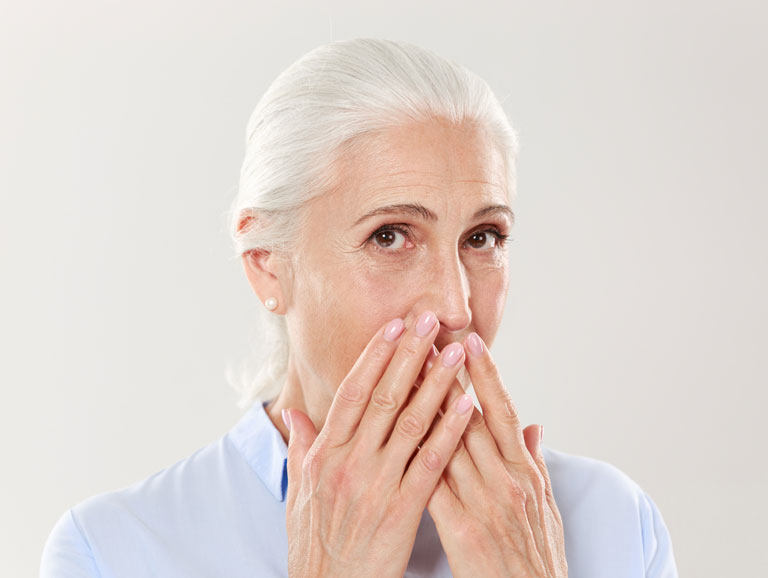
What is bad breath?
Bad breath, also known as halitosis, is an unpleasant odour that comes from the mouth. It may appear occasionally – for example, when you wake up in the morning – or it can be persistent throughout the day. In older adults, it is a common issue that, besides being uncomfortable, can affect self-esteem and social interactions. Although many people believe it’s simply a part of ageing, the truth is that in most cases it can be prevented and successfully treated.
Why does bad breath occur?
Halitosis can have several causes. The most common is the build-up of bacteria in the mouth, which produce strong-smelling compounds when breaking down food particles. This is more likely to happen if you don’t maintain good oral hygiene, if dentures aren’t cleaned properly, or if you don’t brush your tongue.
As we age, saliva production often decreases, leading to what we know as dry mouth. Saliva acts as a natural cleanser, so when it’s lacking, the mouth becomes more prone to bacterial build-up and unpleasant odour.
Other factors that can contribute to bad breath include:
- Oral diseases such as cavities, gingivitis, or periodontitis
- Medicines that cause oral dryness (very common in older adults)
- Lifestyle habits like smoking or drinking alcohol
- Foods rich in garlic, onion or strong spices
- General health issues such as respiratory infections, sinusitis, or gastroesophageal reflux
How to recognise it?
The most obvious sign is an unpleasant smell when talking or breathing, although you may not always notice it yourself. Other symptoms may include:
- A dry or sticky sensation in the mouth
- A whitish or yellowish coating on the tongue
- A metallic or unusual taste
- Gums that bleed or become easily inflamed
- The appearance of cavities or mouth ulcers
How can it be treated?
Treatment depends on the cause, but it usually begins with improving oral hygiene. Your dentist may recommend:
- Professional cleaning to remove tartar and plaque build-up.
- Treating any cavities or periodontal disease.
- Checking and adjusting dentures so they don’t trap food particles.
- Alcohol-free antibacterial rinses or specific toothpastes to reduce bacteria.
Products for dry mouth, such as gels or sprays, if dryness is the main cause of bad breath.

Practical tips for everyday life
- Brush your teeth at least twice a day with fluoride toothpaste and a brush with soft filaments.
- Use dental floss or interdental brushes daily to clean between your teeth.
- Use specialised rinses to reduce odour-causing bacteria.
- Clean your tongue with a tongue cleaner to remove accumulated bacteria.
- Clean your dentures after every meal and remove them at night if advised by your dentist.
- Drink water frequently to prevent dry mouth.
- Avoid smoking and limit alcohol consumption.
- Reduce intake of foods that cause strong odours (garlic, onion, strong spices).
- Eat fresh fruits and vegetables, such as apples or carrots, which help keep your mouth cleaner and fresher.
When to see a dentist or doctor?
Consult a professional if:
- Bad breath persists for several weeks.
- Cavities appear or gums become inflamed and bleed.
- Dry mouth is ongoing and bothersome.
- Bad breath does not improve despite good oral hygiene.
- Other symptoms are present, such as sore throat, reflux, or digestive discomfort.



Remember
Bad breath in older adults should not be considered normal or untreatable. With good daily habits, regular check-ups, and guidance from your dentist or doctor, you can regain fresh breath, improve oral health, and enjoy a more confident and comfortable life.
Fresh breath is a sign of a healthy mouth
Access tailored solutions

Access tailored solutions
Bibliography
- MSD Manuals. (no date). Halitosis (Dental disorders: symptoms of dental and oral disorders). MSD Manuals.
- Naji, N. A., & Hamad, S. A., et al. (2024). An intra-oral infection halitosis and its causes, diagnosis, and treatment strategies – A systematic review. Journal of Angiotherapy, 8(3), 1–9.
- Ortiz V, Filippi A. Halitosis. Monogr Oral Sci. 2021;29:195-200. doi: 10.1159/000510192. Epub 2020 Dec 21. PMID: 33427224.
- Wu, J., Cannon, R. D., Ji, P., Farella, M., & Mei, L. (2020). Halitosis: Prevalence, risk factors, sources, measurement and treatment – A review of the literature. Australian Dental Journal, 65(1), 4–11.