
CARIES
What is it?
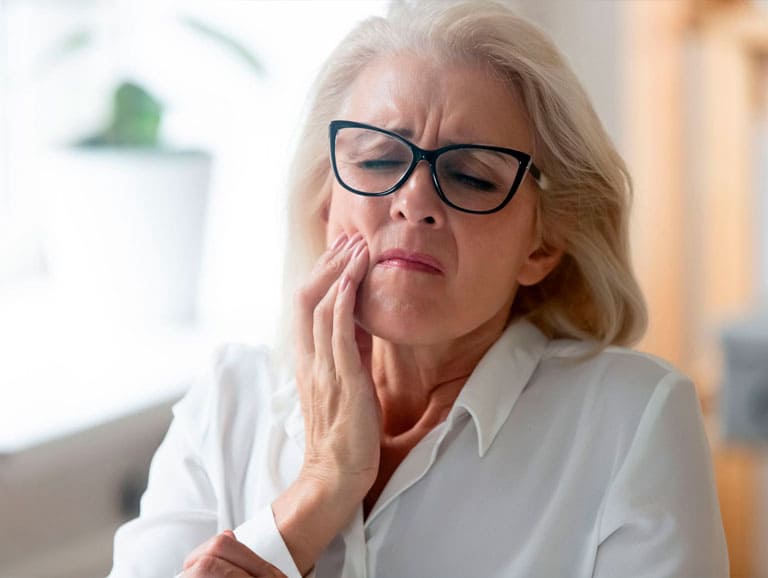
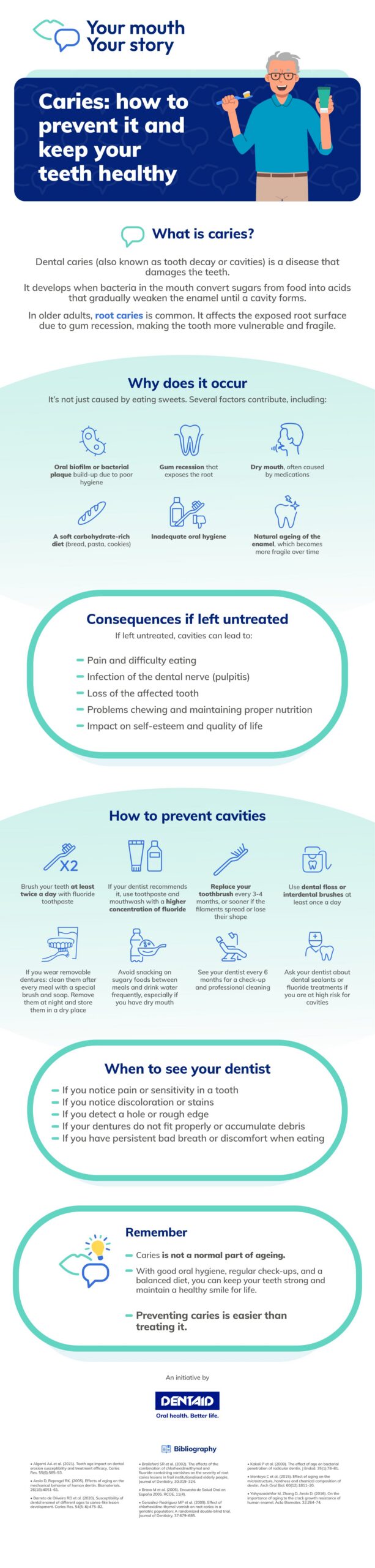
Dental Caries (also known as tooth decay or cavities) is a disease that damages the teeth. It develops when bacteria in the mouth break down sugars from food into acids that gradually weaken tooth enamel, eventually creating a hole or lesion.
Root caries, which affects the tooth’s root, is very common in older adults. This occurs because, over time, the gums tend to recede and expose the roots, which are more vulnerable.
Why does it appear?
Cavities aren’t just caused by “eating sweets.” The truth is, several factors play a role:
- Bacterial plaque build-up due to deficient oral hygiene.
- Receding gums, which leave the tooth root more exposed and unprotected.
- Dry mouth — common with certain medications or medical conditions — reduces saliva’s natural protective effect.
- A soft, carbohydrate-rich diet (bread, cookies, pasta), which easily sticks to the teeth.
- Insufficient hygiene due to physical or cognitive limitations.
- Natural ageing of the enamel, which makes it more fragile.
What are the symptoms?
Still, there are signs to watch for:
Tooth pain or pain from chewing
Sensitivity to cold, heat or sweets
A change in the colour of an area of a tooth (darker or more yellow)
The appearance of visible pits or holes in the tooth.
What are its consequences?
If left untreated, cavities can lead to:
- Pain and discomfort while eating
- Infections that reach the tooth’s nerve (pulpitis)
- Loss of the affected tooth
- Difficulty chewing properly, which can affect nutrition
- A negative impact on self-esteem and quality of life
How is it treated?
Fillings: used when the decay is small.
Crowns: to restore teeth with more extensive decay
Root canal treatment: if the decay reaches the nerve, the inside of the tooth is cleaned and sealed to save it.
Extraction: only in severe cases when the tooth cannot be saved.
Practical tips to prevent it
The best way to prevent tooth decay is through daily care:
- Brush your teeth at least twice a day with fluoride toothpaste. Depending on your risk of caries, your dentist or hygienist may recommend a toothpaste with a higher fluoride concentration.
- Replace your toothbrush every 3-4 months, or sooner if the filaments spread or lose their shape. A worn brush cleans less effectively than a new one.
- Use dental floss or interdental brushes to clean between your teeth at least once a day.
- If you wear removable dentures, clean them after every meal with a denture-specific brush and soap, and remove them at night. Store them in a dry place so your gums can rest.
- Avoid snacking on sugary foods between meals.
- Drink water frequently, especially if you have a dry mouth.
- Visit your dentist every 6 months for check-ups and professional cleanings.
- If you have a high risk of caries, your dentist may recommend in-office fluoride treatments or dental sealants.
When should you see a dentist?
- If you have pain or sensitivity in a tooth.
- If a colour change appears on the tooth surface.
- If you detect a hole, crack or pit in a tooth.
- Any time you have persistent bad breath or discomfort while eating.


Remember
Caries are very common in the older adults, but they can be prevented and treated. Good hygiene, regular check-ups and watching your diet are the keys to maintaining healthy teeth and enjoying a better quality of life.
Access tailored solutions

Access tailored solutions
Bibliography
- Algarni AA et al. (2021). Tooth age impact on dental erosion susceptibility and treatment efficacy. Caries Res. 55(6):585–93.
- Arola D, Reprogel RK. (2005). Effects of aging on the mechanical behavior of human dentin. Biomaterials. 26(18):4051–61.
- Barreto de Oliveira RD et al. (2020). Susceptibility of dental enamel of different ages to caries-like lesion development. Caries Res. 54(5–6):475–82.
- Brailsford SR et al. (2002). The effects of the combination of chlorhexidine/thymol and fluoride-containing varnishes on the severity of root caries lesions in frail institutionalised elderly people. Journal of Dentistry, 30:319–324.
- Bravo M et al. (2006). Oral Health Survey in Spain 2005. RCOE, 11(4).
- González-Rodríguez MP et al. (2009). Effect of chlorhexidine-thymol varnish on root caries in a geriatric population: A randomized double-blind trial. Journal of Dentistry, 37:679–685.
- Kakoli P et al. (2009). The effect of age on bacterial penetration of radicular dentin. J Endod. 35(1):78–81.
- Montoya C et al. (2015). Effect of aging on the microstructure, hardness and chemical composition of dentin. Arch Oral Biol. 60(12):1811–20.
- Yahyazadehfar M, Zhang D, Arola D. (2016). On the importance of aging to the crack growth resistance of human enamel. Acta Biomater. 32:264–74.