
Oral cancer

What is it?
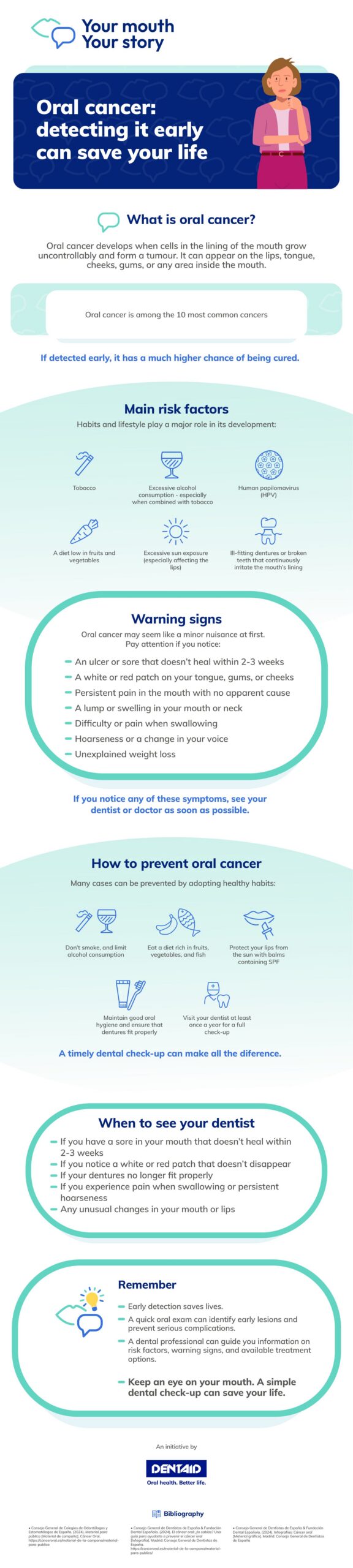
Oral cancer can develop in any part of the mouth, including the lips and the tongue. It begins when some mucosal cells grow uncontrollably and form a tumour.
In Spain, about 8,000 new cases of oral cancer are diagnosed each year, and around 1,500 people die from it, making it a significant health concern.
The good news is that early detection greatly increases the chances of a cure. This is why prevention and regular dental check-ups are so important.
Why does it develop?
The main risk factors include:
- Tobacco: responsible for 2 out of 3 cases of oral cancer.
- Excessive alcohol consumption: greatly increases risk, especially when combined with tobacco.
- Certain viruses: such as human papillomavirus (HPV).
- Unhealthy diet: low in fruits and vegetables.
- Excessive sun exposure: can lead to lip cancer.
- Ill-fitting dentures or broken teeth that continuously irritate the mouth’s lining.

What are the symptoms?
An ulcer or sore in the mouth that doesn’t heal within 2-3 weeks
White or red patches on the gums, tongue, or cheeks that don’t disappear
Unexplained pain in the mouth
A lump or swelling in the mouth or neck
Difficulty or pain when swallowing, or a feeling of something “stuck” in the throat
Change in voice or persistent hoarseness
Unexplained weight loss
If you notice any of these signs, see your dentist or doctor promptly. Early detection can save your life.
What are its consequences?
If oral cancer is not detected early, it can significantly affect quality of life:
- Difficulty chewing, swallowing, or speaking
- Changes in physical appearance and self-esteem.
- Need for more aggressive treatments (extensive surgery, radiotherapy, or chemotherapy).
- Increased risk of mortality
Early detection is crucial: 5-year survival rates double if the diagnosis is early.
How is it treated?
Surgery: removal of the tumour.
Radiotherapy: high-energy rays to destroy cancer cells.
Chemotherapy: drugs that target cancer, sometimes combined with radiotherapy.
Targeted therapies and immunotherapy: modern options that attack cancer cells while minimising damage to healthy tissue.
Palliative care: pain management and improvement of quality of life in advanced stages.
Practical tips to prevent it
Oral cancer is largely preventable:
- Don’t smoke and limit alcohol consumption.
- Eat a diet rich in fruits, vegetables, and fish.
- Protect your lips from the sun by using lip balm with SPF.
- Maintain good oral hygiene and ensure dentures fit properly.
- Visit your dentist at least once a year for check-ups.
When to see a dentist?
- If a sore in your mouth doesn’t heal within 2-3 weeks
- If a white or red spot appears on your tongue, gums, or lips and doesn’t go away
- If your dentures suddenly stop fitting
- If you experience pain when swallowing or persistent hoarseness
- Whenever you notice any unusual change in your mouth


Remember
A simple dental check-up can save your life.
Monitoring your mouth and seeing your dentist promptly are the best defence against oral cancer.
Bibliography
- General Council of Colleges of Dentists and Stomatologists of Spain. (2024). Material for the public [Campaign materials]. Cáncer Oral. [Oral Cancer]
- General Council of Dentists of Spain and Spanish Dental Foundation. (2024). Oral Cancer: Did you know? A guide to help you prevent oral cancer [Infographic]. Madrid: General Council of Dentists of Spain.
- General Council of Dentists of Spain and Spanish Dental Foundation. (2024). Infographics: Cáncer oral [Material gráfico] (Oral cancer [Graphic materials]) Madrid: General Council of Dentists of Spain.